Certified Gel Type Strong Base Anion Resin From China: What WQA and NSF Approval Means for Buyers
XIAN, SHAANXI, CHINA, August 21, 2026 /EINPresswire.com/ -- Municipal drinking water utilities face stringent public health mandates across global markets. Sourcing filtration media across international borders requires extensive verification to confirm that synthetic polymer products do not leach harmful organic compounds or heavy metals into potable water supplies. When engineering teams evaluate international suppliers, third-party certification provides essential proof of material safety and manufacturing consistency. Selecting a Certified Gel Type Strong Base Anion Resin From China allows procurement specialists to achieve structural cost efficiency while fully satisfying municipal regulatory requirements. These international approvals establish transparent quality baselines that protect public health, simplify municipal compliance audits, and ensure long-term operational performance in critical water treatment infrastructure.
Q1: Why Do WQA and NSF/ANSI/CAN 61 Certifications Matter When Sourcing Anion Exchange Resins Globally?
Procurement officers and engineering contractors manage significant legal and operational risks when selecting chemical treatment media for municipal water projects. Municipal authorities routinely mandate strict compliance with health safety standards, such as NSF/ANSI/CAN 61 for drinking water system components. The Water Quality Association Gold Seal and NSF certifications confirm that polymeric separation materials have undergone exhaustive chemical extraction testing under standardized laboratory conditions. Without these accredited third-party credentials, water treatment plants risk severe regulatory delays, project commissioning rejections, and potential public health liabilities.
Global supply chains present unique verification challenges for procurement teams. Independent testing organizations evaluate manufacturing facilities directly, examining raw material purity, chemical formulations, and quality management protocols. Certification verifies that a polymer bead will not introduce unreacted monomers, residual solvents, or heavy metal contaminants into treated effluent. Therefore, sourcing certified media eliminates subjective supplier claims and replaces them with verified toxicological data. Municipal engineering firms can confidently integrate certified international media into public water treatment plant designs, knowing that the material complies with global health standards. Furthermore, these credentials protect utilities against compliance failures during routine regulatory reviews, ensuring continuous operational authority.
Q2: What Defines the True Rigor and Global Authority Behind WQA and NSF/ANSI/CAN 61 Certifications?
The global prestige of Water Quality Association Gold Seal and NSF/ANSI/CAN 61 certifications stems from an unyielding, multi-layered verification methodology that goes far beyond standard laboratory testing. Obtaining these credentials requires complete chemical formulation disclosure down to every catalyst, monomer, crosslinking agent, and solvent used during polymer synthesis. Certifying bodies subject resin media to worst-case extraction protocols, holding samples in aggressive low-pH and high-pH water matrices across variable temperatures for extended contact periods. Advanced analytical instruments measure leachate concentrations down to parts-per-billion thresholds. Products fail certification immediately if a single unreacted monomer or breakdown solvent exceeds strict toxicological health limits.
Furthermore, these credentials represent dynamic operational compliance rather than a one-time product approval. Accredited agencies enforce mandatory, unannounced annual facility audits to inspect raw material lot logs, verify batch traceability, and pull random production samples directly from assembly lines for re-testing. Obtaining internationally recognized health safety certificates proves that a manufacturing process operates under permanent quality control. For global manufacturers like Sunresin, maintaining active certifications across automated production hubs demonstrates a long-term capital and operational commitment to total quality control. Procurement directors and EPC engineers view WQA Gold Seal and NSF/ANSI/CAN 61 marks as non-negotiable safeguards because they eliminate manufacturing opacity, mitigate toxicological liabilities, and guarantee that certified SEPLITE resin lines meet identical safety standards anywhere in the world.
Q3: What Specific Technical and Toxicological Benchmarks Do Gel-Type SBA Resins Undergo During Certification?
Gel-type strong base anion exchange resins feature a crosslinked polystyrene matrix equipped with Type I quaternary ammonium functional groups. This polymer structure provides high operating exchange capacity and rapid regeneration kinetics, making it ideal for removing nitrates, sulfates, chromate, and trace anionic contaminants. However, the manufacturing process requires specialized chemical reactions involving styrene, divinylbenzene, and chloromethylation agents. Consequently, certifying bodies subject gel-type anion resins to rigorous leaching and extraction protocols to verify chemical stability before approving them for potable water use.
During certification testing, laboratory technicians expose resin samples to aggressive water conditions across varying pH levels and temperatures. Analysts measure total organic carbon leaching, residual unreacted monomers such as styrene and divinylbenzene, and quaternary ammonium breakdown byproducts. Certified resins must remain below strict, parts-per-billion health effects thresholds. Beyond chemical extractables, certifying agencies evaluate physical bead toughness and hydraulic stability. High-quality gel resins resist osmotic shock, physical cracking, and pressure drop increases during rapid backwashing and chemical regeneration cycles. This physical durability prevents bead breakdown, which could otherwise release fine polymer particles into downstream distribution networks and compromise water clarity.
Q4: How Does Sunresin Ensure Batch-to-Batch Compliance Across Commercial-Scale Production?
Maintaining consistent quality across massive production volumes requires sophisticated manufacturing automation and rigorous analytical oversight. Operating as a global leader in separation materials, Sunresin(Sunresin New Materials Co. Ltd.) has established an annual production capacity of 100,000 cubic meters across modern manufacturing complexes, including dedicated facilities in Gaoling and Pucheng. The manufacturer controls every stage of synthesis, starting with strict quality screening of raw monomers to eliminate trace impurities before polymerization begins. Automated control systems monitor temperature, agitation speed, and chemical dosing during suspension polymerization, ensuring narrow particle size distribution and uniform crosslinking density.
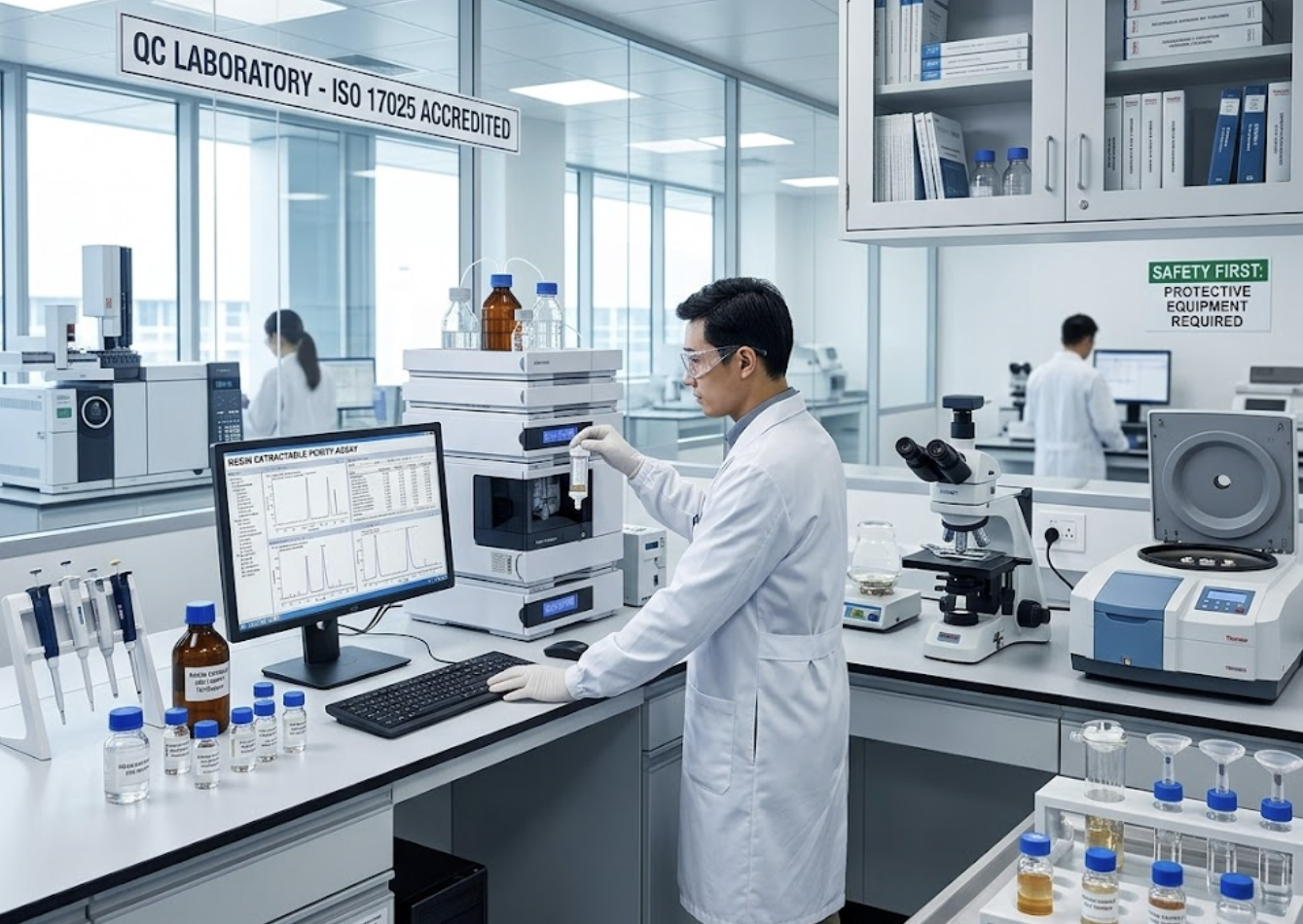
Quality control protocols extend beyond basic physical parameters. Quality assurance teams utilize advanced analytical equipment, such as gas chromatography-mass spectrometry and inductively coupled plasma optical emission spectrometry, to verify product purity. Every commercial batch undergoes dynamic exchange capacity testing, moisture retention analysis, and extractable organic screening before packaging. In addition, manufacturing plants operate under certified ISO 9001 and ISO 14001 management systems. Independent auditors from the Water Quality Association and NSF conduct unannounced annual facility inspections to audit production logs, verify raw material traceability, and collect random product samples. This continuous oversight guarantees that commercial shipments from Sunresin New Materials Co. Ltd. maintain identical purity standards to the initial samples tested during formal certification.
Q5: How Can Engineering Integrators Leverage Certified Resins for Municipal Bidding and Operations?
Engineering, procurement, and construction contractors gain substantial competitive advantages by incorporating pre-certified ion exchange media into municipal project tenders. Utilizing SEPLITE certified gel-type strong base anion resins streamlines the regulatory approval phase, allowing engineering teams to submit pre-approved material specifications to municipal water boards. This proactive compliance reduces project timeline risks, accelerates system commissioning, and eliminates costly secondary validation testing. Furthermore, high-capacity gel resins optimize column hydraulics, enabling system integrators to design smaller vessel footprints without sacrificing daily treatment volume.
From an operational perspective, certified high-capacity resins optimize long-term operational expenditure for water plant operators. Excellent kinetic performance and uniform particle size reduce chemical regenerant consumption and minimize rinse water volume requirements. High mechanical strength protects against premature bead degradation, extending total service life and lengthening media replacement intervals. To support global project deployment, Sunresin combines certified polymer products with specialized equipment engineering, custom vessel fabrication, and turnkey EPC capabilities. Overseas warehousing networks, including European regional hubs in Düsseldorf, maintain local inventory to ensure rapid delivery. By pairing certified polymer technology with localized technical support, Sunresin helps utilities achieve strict public health compliance, secure reliable supply chains, and lower total lifecycle operating costs.
To review product technical specifications, certification document copies, and global project references, visit the official corporate website at https://www.seplite.com/.
Q1: Why Do WQA and NSF/ANSI/CAN 61 Certifications Matter When Sourcing Anion Exchange Resins Globally?
Procurement officers and engineering contractors manage significant legal and operational risks when selecting chemical treatment media for municipal water projects. Municipal authorities routinely mandate strict compliance with health safety standards, such as NSF/ANSI/CAN 61 for drinking water system components. The Water Quality Association Gold Seal and NSF certifications confirm that polymeric separation materials have undergone exhaustive chemical extraction testing under standardized laboratory conditions. Without these accredited third-party credentials, water treatment plants risk severe regulatory delays, project commissioning rejections, and potential public health liabilities.
Global supply chains present unique verification challenges for procurement teams. Independent testing organizations evaluate manufacturing facilities directly, examining raw material purity, chemical formulations, and quality management protocols. Certification verifies that a polymer bead will not introduce unreacted monomers, residual solvents, or heavy metal contaminants into treated effluent. Therefore, sourcing certified media eliminates subjective supplier claims and replaces them with verified toxicological data. Municipal engineering firms can confidently integrate certified international media into public water treatment plant designs, knowing that the material complies with global health standards. Furthermore, these credentials protect utilities against compliance failures during routine regulatory reviews, ensuring continuous operational authority.
Q2: What Defines the True Rigor and Global Authority Behind WQA and NSF/ANSI/CAN 61 Certifications?
The global prestige of Water Quality Association Gold Seal and NSF/ANSI/CAN 61 certifications stems from an unyielding, multi-layered verification methodology that goes far beyond standard laboratory testing. Obtaining these credentials requires complete chemical formulation disclosure down to every catalyst, monomer, crosslinking agent, and solvent used during polymer synthesis. Certifying bodies subject resin media to worst-case extraction protocols, holding samples in aggressive low-pH and high-pH water matrices across variable temperatures for extended contact periods. Advanced analytical instruments measure leachate concentrations down to parts-per-billion thresholds. Products fail certification immediately if a single unreacted monomer or breakdown solvent exceeds strict toxicological health limits.
Furthermore, these credentials represent dynamic operational compliance rather than a one-time product approval. Accredited agencies enforce mandatory, unannounced annual facility audits to inspect raw material lot logs, verify batch traceability, and pull random production samples directly from assembly lines for re-testing. Obtaining internationally recognized health safety certificates proves that a manufacturing process operates under permanent quality control. For global manufacturers like Sunresin, maintaining active certifications across automated production hubs demonstrates a long-term capital and operational commitment to total quality control. Procurement directors and EPC engineers view WQA Gold Seal and NSF/ANSI/CAN 61 marks as non-negotiable safeguards because they eliminate manufacturing opacity, mitigate toxicological liabilities, and guarantee that certified SEPLITE resin lines meet identical safety standards anywhere in the world.
Q3: What Specific Technical and Toxicological Benchmarks Do Gel-Type SBA Resins Undergo During Certification?
Gel-type strong base anion exchange resins feature a crosslinked polystyrene matrix equipped with Type I quaternary ammonium functional groups. This polymer structure provides high operating exchange capacity and rapid regeneration kinetics, making it ideal for removing nitrates, sulfates, chromate, and trace anionic contaminants. However, the manufacturing process requires specialized chemical reactions involving styrene, divinylbenzene, and chloromethylation agents. Consequently, certifying bodies subject gel-type anion resins to rigorous leaching and extraction protocols to verify chemical stability before approving them for potable water use.
During certification testing, laboratory technicians expose resin samples to aggressive water conditions across varying pH levels and temperatures. Analysts measure total organic carbon leaching, residual unreacted monomers such as styrene and divinylbenzene, and quaternary ammonium breakdown byproducts. Certified resins must remain below strict, parts-per-billion health effects thresholds. Beyond chemical extractables, certifying agencies evaluate physical bead toughness and hydraulic stability. High-quality gel resins resist osmotic shock, physical cracking, and pressure drop increases during rapid backwashing and chemical regeneration cycles. This physical durability prevents bead breakdown, which could otherwise release fine polymer particles into downstream distribution networks and compromise water clarity.
Q4: How Does Sunresin Ensure Batch-to-Batch Compliance Across Commercial-Scale Production?
Maintaining consistent quality across massive production volumes requires sophisticated manufacturing automation and rigorous analytical oversight. Operating as a global leader in separation materials, Sunresin(Sunresin New Materials Co. Ltd.) has established an annual production capacity of 100,000 cubic meters across modern manufacturing complexes, including dedicated facilities in Gaoling and Pucheng. The manufacturer controls every stage of synthesis, starting with strict quality screening of raw monomers to eliminate trace impurities before polymerization begins. Automated control systems monitor temperature, agitation speed, and chemical dosing during suspension polymerization, ensuring narrow particle size distribution and uniform crosslinking density.
Quality control protocols extend beyond basic physical parameters. Quality assurance teams utilize advanced analytical equipment, such as gas chromatography-mass spectrometry and inductively coupled plasma optical emission spectrometry, to verify product purity. Every commercial batch undergoes dynamic exchange capacity testing, moisture retention analysis, and extractable organic screening before packaging. In addition, manufacturing plants operate under certified ISO 9001 and ISO 14001 management systems. Independent auditors from the Water Quality Association and NSF conduct unannounced annual facility inspections to audit production logs, verify raw material traceability, and collect random product samples. This continuous oversight guarantees that commercial shipments from Sunresin New Materials Co. Ltd. maintain identical purity standards to the initial samples tested during formal certification.
Q5: How Can Engineering Integrators Leverage Certified Resins for Municipal Bidding and Operations?
Engineering, procurement, and construction contractors gain substantial competitive advantages by incorporating pre-certified ion exchange media into municipal project tenders. Utilizing SEPLITE certified gel-type strong base anion resins streamlines the regulatory approval phase, allowing engineering teams to submit pre-approved material specifications to municipal water boards. This proactive compliance reduces project timeline risks, accelerates system commissioning, and eliminates costly secondary validation testing. Furthermore, high-capacity gel resins optimize column hydraulics, enabling system integrators to design smaller vessel footprints without sacrificing daily treatment volume.
From an operational perspective, certified high-capacity resins optimize long-term operational expenditure for water plant operators. Excellent kinetic performance and uniform particle size reduce chemical regenerant consumption and minimize rinse water volume requirements. High mechanical strength protects against premature bead degradation, extending total service life and lengthening media replacement intervals. To support global project deployment, Sunresin combines certified polymer products with specialized equipment engineering, custom vessel fabrication, and turnkey EPC capabilities. Overseas warehousing networks, including European regional hubs in Düsseldorf, maintain local inventory to ensure rapid delivery. By pairing certified polymer technology with localized technical support, Sunresin helps utilities achieve strict public health compliance, secure reliable supply chains, and lower total lifecycle operating costs.
To review product technical specifications, certification document copies, and global project references, visit the official corporate website at https://www.seplite.com/.
Sunresin New Materials Co. Ltd.
+86 29 8669 1600
email us here
Legal Disclaimer:
EIN Presswire provides this news content "as is" without warranty of any kind. We do not accept any responsibility or liability for the accuracy, content, images, videos, licenses, completeness, legality, or reliability of the information contained in this article. If you have any complaints or copyright issues related to this article, kindly contact the author above.

