

Ongwe Minerals Discovers New Bedrock Anomaly at Its Belmont Prospect, Khorixas Gold Project in Namibia
Highlights:
- New 2km long bedrock gold anomaly outlined under thick alluvial and calcrete cover on the Khorixas Fault zone at Belmont.
- The altered and mineralised wall rock is up to 125m wide with gold values in the bedrock samples to 0.2 g/t, and it is expected that there will be higher grade quartz veins within the package.
- The newly discovered “Plains” anomaly is a compelling target which will be tested by diamond drilling once the bedrock sampling has been completed.
- The bedrock sampling program has now moved to the Manga target on the Omatjete Project.
VANCOUVER, British Columbia, April 13, 2026 (GLOBE NEWSWIRE) -- Ongwe Minerals Inc. (TSXV:OGW) (“Ongwe” or “the Company”) is pleased to report the discovery of a 2km long, strongly anomalous bedrock zone along the Khorixas Fault Zone at its Belmont prospect.
Ongwe Minerals has three gold flagship projects in Namibia and a dominant land position in the emerging and highly prospective Northwest Damara Gold Belt, comprising the following:
- The Khorixas Project (154,000ha) which includes the Belmont Prospect, an orogenic gold system with a surface footprint of 12km x 6km and numerous high grade rock chips at surface.
- The Omatjete Project (151,800ha) which contains the Manga Prospect, an orogenic gold system 30km along strike from the recently discovered Kokoseb gold deposit (WIA Gold), with a surface footprint of 4.5 x 1km.
-
The Outjo Project (46,000 ha) which is along strike from Osino’s Eureka Gold Discovery and occupies a geological setting similar to that of the Eureka Discovery.
Dave Underwood, Ongwe’s CEO commented: “The initial bedrock sampling program at Belmont has produced what we were hoping for, a coherent and extensive zone of bedrock alteration and mineralization along the Khorixas Fault. We have now defined a strong walk-up drill target on a prospective basin margin structure, which will be tested in the coming months along with the other defined targets. The bedrock sampling technique essentially collects single, blind, rock chip samples on a grid of 25 x 200m and is designed to define the mineralising system, not sample individual high-grade veins. The anomalous but low-grade gold values are therefore expected and welcomed. The chances of sampling individual high grade quartz veins within the mineralized zone are very slim at this point. However, the presence of high-grade rock chip samples from outcropping quartz veins in the vicinity, gives us confidence that higher grades may be present within the Plains bedrock anomaly.”
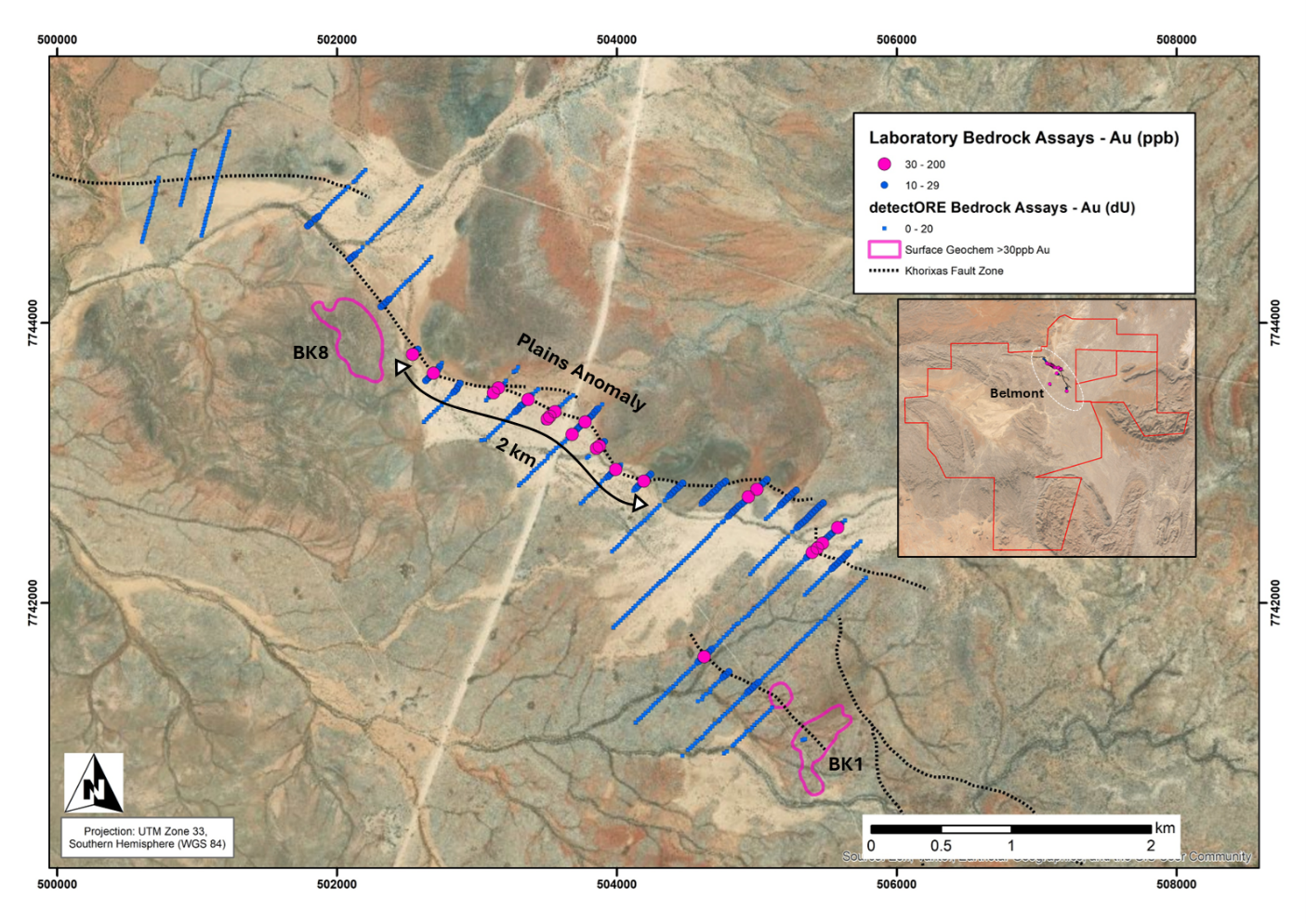
Figure 1: Bedrock sampling assays outlining the newly delineated Plains anomaly within the Belmont prospect. Full explanation of the in-house and MSALABS assays given in the paragraph below. In the figure, all the samples that were re-assayed by MSALABS are shown as larger blue and pink dots.
Plains Anomaly
A total of 3,970m of drilling was completed across the Khorixas Fault Zone, comprising 639 vertical holes on a systematic grid of 25m hole spacing and 200m line spacing. Drilling typically intersected sequences of alluvial sediments, clays, and calcrete before reaching bedrock, with an average hole depth of 6m. Each hole was drilled approximately 1 metre into bedrock, which was collected as a composite sample. The sample was initially analyzed using the Company’s in-house detectORE™ system (see explanation under Assay Method below) and samples returning values greater than 20 detectable Units (dU) were submitted for fire assay analysis at MSALABS in Omaruru, with assay results pending.
The Plains anomaly defines a well-constrained, 2km long and up to 125m wide zone of in-situ bedrock alteration and mineralization (see Figure 1), spatially associated with the Khorixas Fault Zone. Gold mineralization is typically hosted within the highly deformed hanging wall of the fault and is associated with intense iron-carbonate alteration and disseminated sulphides. The Khorixas Fault Zone is interpreted as a reactivated basin-margin structure separating competent Archaean basement rocks to the northeast from more ductile sedimentary units of the Neoproterozoic Kuiseb Formation to the southwest (see Figure 2). This contact is the key control for the Plains anomaly, with reactivation and lithological contrasts likely focusing mineralizing fluid flow.
In addition, two discrete, single-line anomalies have been identified approximately 800m and 1,400m to the east, respectively, coinciding with interpreted fault bifurcations and a southerly rotation of the Khorixas Fault.
The Plains anomaly represents a new discovery within an area that was previously inaccessible to conventional surface sampling due to an active alluvial cover (see Figure 3). Its delineation highlights the effectiveness of the Company’s bedrock sampling approach in identifying and refining high-priority drill targets.
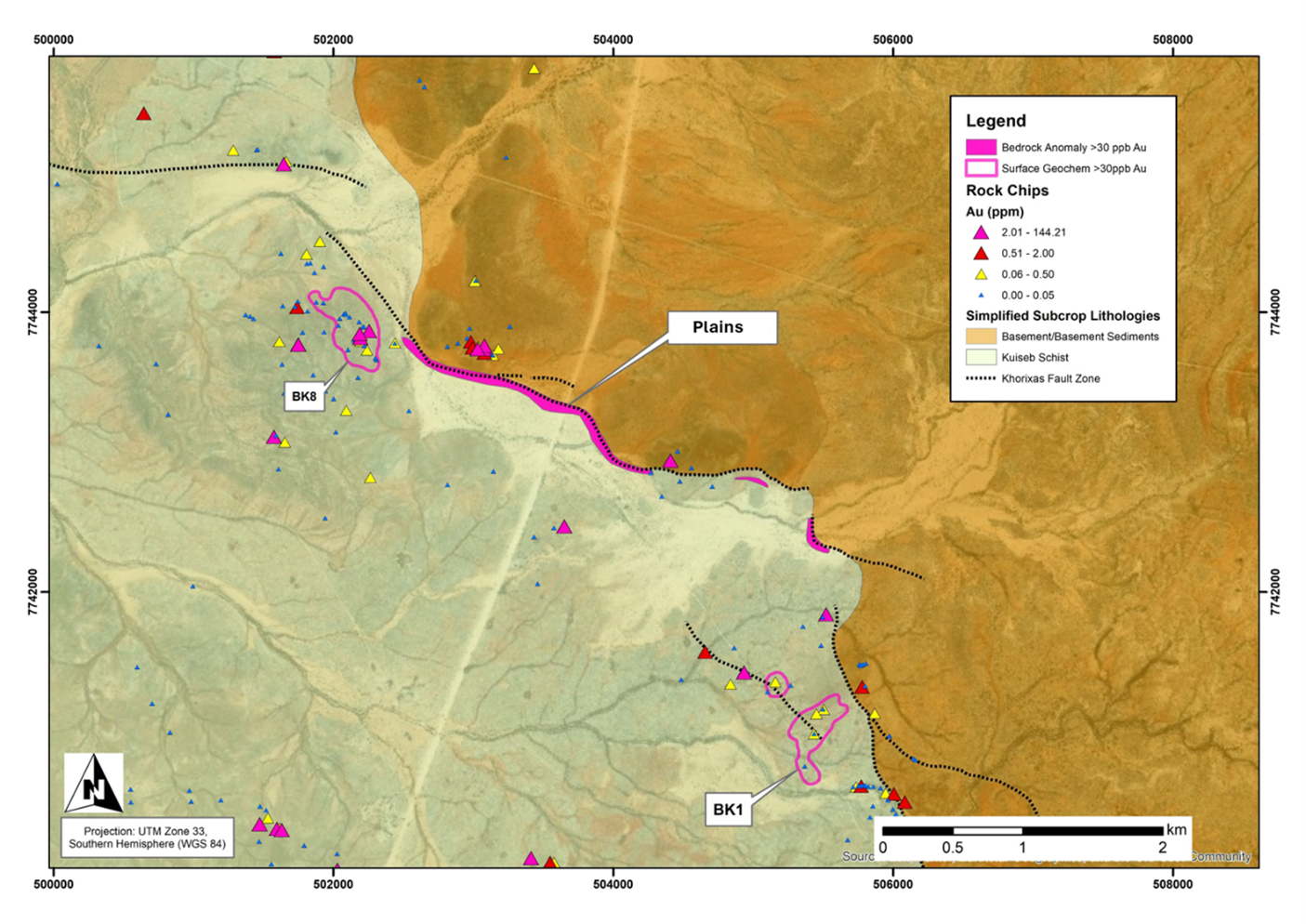
Figure 2: Simplified subcrop lithological map outlining the Plains bedrock anomaly on the contact between competent Archean basement and basement derived sediments (orange) and the Neoproterozoic Kuiseb schist (green). See NI43-101 dated 22nd November 2023 for rock chip details.
Exploration Update
The Company has completed a total of 3,970m of RC bedrock sampling along the Khorixas Fault Zone at the Belmont prospect. With this phase of work now finished, the drill rig has been mobilized to the Omatjete Gold Project, where between 2,000 and 3,000m of bedrock sampling is planned at the Manga Prospect. To date, approximately 1,500m have been completed at Manga, with assay results pending.
Following completion of bedrock sampling at Manga, the rig is expected to return to Belmont to undertake additional bedrock sampling across a series of splay targets, including BK2, BK5, BK6, and BK7.
The Company remains on schedule to complete the current bedrock sampling program by the end of April 2026. All outstanding assay results are anticipated by the end of May 2026, with a diamond drilling program planned to commence thereafter.
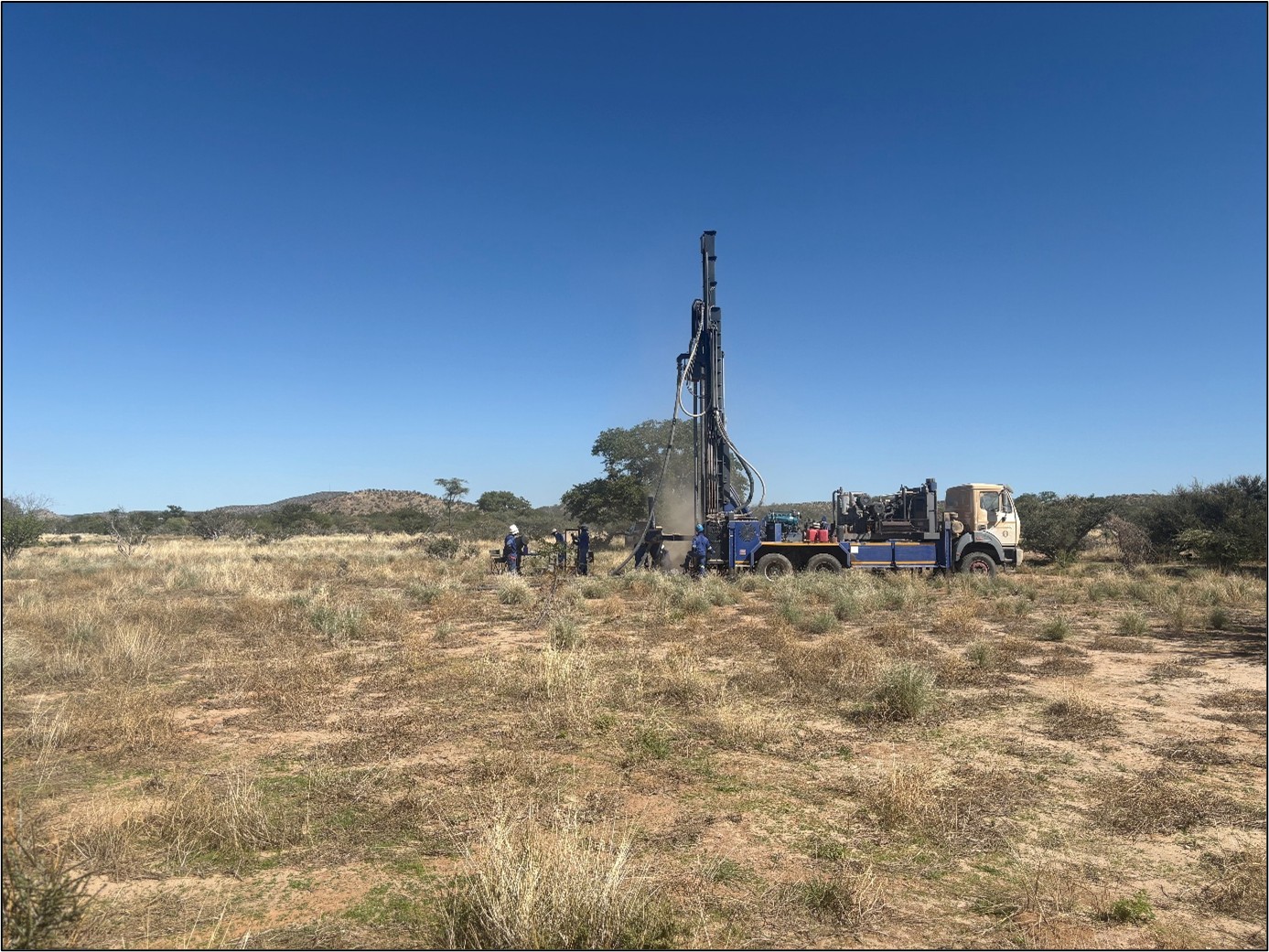
Figure 3: RC drill rig in the process of doing bedrock sampling on the Plains anomaly.
Assay Method
The Company utilized the detectORE™ analytical technique, designed to enable the measurement of trace gold concentrations in geological samples using a portable X-Ray Fluorescence (pXRF) instrument. This process overcomes the traditional limitations of gold analysis by pXRF including low gold concentrations and metal peak interference. The method involves leaching 250g of sieved material in a sealed pouch with 500ml of GLIX-20™ lixiviant and a Collector Device (CD). Following a 16-hour tumble in a Maxi Mixer barrel to dissolve the gold, the CD is removed, rinsed, and analyzed for 150 seconds using detectORE™ mode firmware. This partial analysis technique is managed through pLIMS™ software with strict QAQC protocols to identify relative gold anomalism. The detectORE™ gold technique is designed for rapid on-site assessment and is not used for the formal quantification of gold content or the estimation of Mineral Resources. An extensive orientation program was carried out before putting the detectORE™ methodology into production by comparing soil, calcrete and rock chip sample assays with Aqua Regia and FireICP. The detectORE™ system performed extremely well and identified the same anomalies as the laboratory techniques in all conditions.
As part of the current exploration program, all bedrock samples undergo an initial in-house analysis using the detectORE™ technique. Any samples returning a value equal to or greater than 20 detectable Units (dU) are prioritized for formal verification via Fire Assay at the MSALAB facility in Omaruru, Namibia, which is underway. The Fire Assay procedure involves drying and splitting the sample to 1kg, followed by crushing to 2mm. A 250g sub-sample is then pulverized to 85% passing 75 microns, from which a final 50g aliquot is taken for Fire Assay with an Atomic Absorption (AA) finish.
QAQC
All Ongwe’s sample assay results have been independently monitored through a quality assurance / quality control ("QA/QC") program including the insertion of blind standards, blanks, and field duplicate samples. The Company maintains rigorous monitoring for both in-house and laboratory analyses to ensure data reliability. For the detectORE™ process, which provides rapid on-site assessment of gold anomalism, a Certified Reference Material (CRM) sample is inserted every 15 samples to monitor the performance of the pXRF instrument and the leaching efficiency. For the formal Fire Assay verification conducted at MSALABS, a CRM is inserted every 30 samples. This laboratory procedure involves precise pulverization and a 50g fire assay with an Atomic Absorption (AA) finish to provide formal quantification for prioritized bedrock samples.
About Ongwe Minerals Inc.
Ongwe Minerals Inc. is a Canadian listed gold exploration company focused on the discovery and advancement of new gold systems in Namibia. The Ongwe team, previously with Osino Resources (sold to Shanjin International for CAD$368M), has a history of making and advancing gold discoveries in Namibia, including Osino’s Twin Hills (currently in construction) and Eureka deposits, and the advancement and sale of Auryx Gold’s Otjikoto gold deposit (in production, sold to B2Gold for CAD$180M).
The Company’s current focus is on three promising gold projects in the emerging Northwest Damara gold belt, with a focus on the Omatjete and Khorixas Gold Projects.
The Omatjete Gold Project is strategically located along the regional Okondeka Fault Zone, which also hosts the Kokoseb gold deposit (WIA Gold). Early surface work by Ongwe has led to the discovery of the Manga Gold Prospect which has a 4.5km x 1km footprint of gold in soil and early scout drilling indicating gold in bedrock. This area has significant growth potential and work is ongoing to define the strike extent of the Manga discovery along the Okondeka Fault Zone.
The Khorixas Gold Project is situated just 60km west of Osino's Eureka gold project, adjacent to the northern margin of the Damara Orogenic Belt. Khorixas hosts two large-scale surface discoveries called Belmont and K17. The Belmont prospect has a surface gold footprint of approximately 12 × 6km and lies between the regional scale, basin margin, Khorixas Fault and the Belmont Thrust Zone. Calcrete and grab sampling to date have indicated eighteen target areas.
Qualified Person
Carl Joone, BSc. (Hons) is the President and Co-Founder of Ongwe Minerals Inc. and is a registered Professional Natural Scientist with the South African Council for Natural Scientific Professions (Pr. Sci. Nat. No. 172695) and a Qualified Person for the purposes of National Instrument 43-101. Carl has verified all the data disclosed by plotting and verifying against raw data received. Carl has also reviewed and approved the scientific and technical information in this news release
ON BEHALF OF THE BOARD OF DIRECTORS
“Dave Underwood”
Chief Executive Officer
| CONTACT INFORMATION | |
| Ongwe Minerals Inc. | Ongwe Minerals Inc. |
| Dave Underwood, Chief Executive Officer | Carl Joone, President & Co-Founder |
| Email: dave@ongweminerals.com | Email: carl@ongweminerals.com |
Neither the TSX Venture Exchange nor its Regulation Services Provider (as that term is defined in the policies of the TSX Venture Exchange) accepts responsibility for the adequacy or accuracy of this press release.
Cautionary Statements Regarding Forward Looking Information
This press release contains "forward-looking information" within the meaning of applicable Canadian securities legislation. Forward-looking information includes, without limitation, statements regarding the use of proceeds from the Company's future plans or prospects of the Company, including prospects for discovery of mineral resources, the results of future exploration programs, and economic recoverability of mineral resources. Generally, forward-looking information can be identified by the use of forward-looking terminology such as "plans", "expects" or "does not expect", "is expected", "budget", "scheduled", "estimates", "forecasts", "intends", "anticipates" or "does not anticipate", or "believes", or variations of such words and phrases or state that certain actions, events or results "may", "could", "would", "might" or "will be taken", "occur" or "be achieved". Forward-looking statements are necessarily based upon a number of assumptions that, while considered reasonable by management, are inherently subject to business, market and economic risks, uncertainties and contingencies that may cause actual results, performance or achievements to be materially different from those expressed or implied by forward-looking statements. Although the Company has attempted to identify important factors that could cause actual results to differ materially from those contained in forward-looking information, there may be other factors that cause results not to be as anticipated, estimated or intended. There can be no assurance that such information will prove to be accurate, as actual results and future events could differ materially from those anticipated in such statements. Accordingly, readers should not place undue reliance on forward-looking information. Other factors which could materially affect such forward-looking information are described in the risk factors in the Company's most recent annual management's discussion and analysis which is available on the Company's profile on SEDAR+ at www.sedarplus.ca. The Company does not undertake to update any forward-looking information, except in accordance with applicable securities laws.
Photos accompanying this announcement are available at:
https://www.globenewswire.com/NewsRoom/AttachmentNg/b23d40ac-9560-4a69-80d9-45271e046a1d
https://www.globenewswire.com/NewsRoom/AttachmentNg/fb6678ee-eb64-4f67-b62f-aee1f828ad42
https://www.globenewswire.com/NewsRoom/AttachmentNg/0b7472d1-db98-4729-8bad-03c6d36daccd


Figure 1
Bedrock sampling assays outlining the newly delineated Plains anomaly within the Belmont prospect. Full explanation of the in-house and MSALABS assays given in the paragraph below. In the figure, all the samples that were re-assayed by MSALABS are shown as larger blue and pink dots.
Figure 2
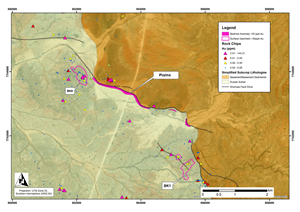
Simplified subcrop lithological map outlining the Plains bedrock anomaly on the contact between competent Archean basement and basement derived sediments (orange) and the Neoproterozoic Kuiseb schist (green). See NI43-101 dated 22nd November 2023 for rock chip details.
Figure 3
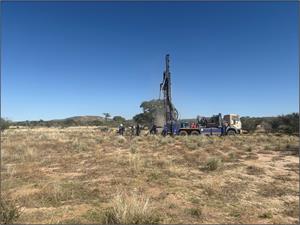
RC drill rig in the process of doing bedrock sampling on the Plains anomaly.
Legal Disclaimer:
EIN Presswire provides this news content "as is" without warranty of any kind. We do not accept any responsibility or liability for the accuracy, content, images, videos, licenses, completeness, legality, or reliability of the information contained in this article. If you have any complaints or copyright issues related to this article, kindly contact the author above.
